

Serro AI
Serro AI acts as a coordination layer that gives human-agent teams live program memory and automated workflows to scale output without losing control.
product Details
Explore More
Alternatives
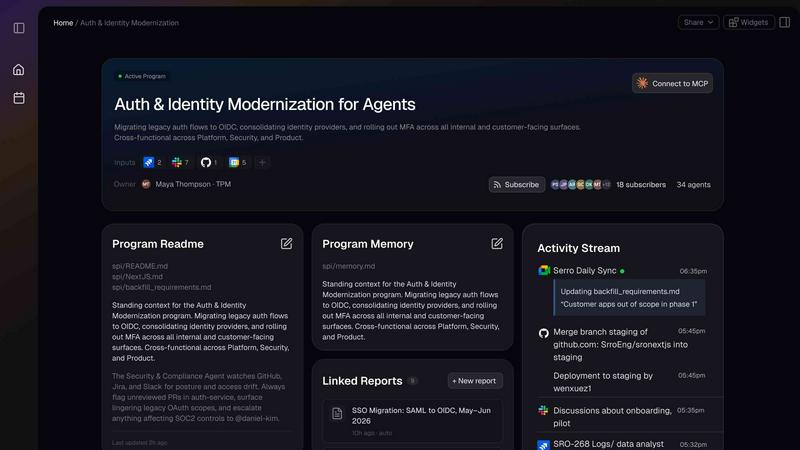
About Serro AI
Serro AI is an agentic Technical Program Management (TPM) infrastructure platform, purpose-built for the Technical Program Management function in modern engineering organizations. Unlike traditional task trackers, roadmap tools, documentation systems, dashboards, code-wikis, or generic project management platforms, Serro treats programs as first-class units of work. It transforms scattered execution signals from tools like Jira, GitHub, Linear, Slack, documents, meetings, and roadmaps into two critical capabilities: trusted temporal program memory and real-time status coordination. The trusted temporal program memory serves as a living record of shared goals, decisions, risks, dependencies, and history that both humans and AI agents can act upon. The real-time status coordination ensures that everyone from engineers to executives has a clear, current picture of organizational reality. Serro is designed for a new era where AI has increased output but coordination has not scaled accordingly. The product is built for Technical Program Managers, Engineering Managers, Product Managers, engineering leaders, and operators who need to manage cross-functional programs with less overhead and more accuracy. Serro offers two tiers: Serro Pro for enterprises looking to scale existing TPM capacity, and Serro Lite for earlier-stage companies that need AI-powered TPM capacity to help smaller teams scale their live coordination efforts. The platform integrates directly into existing workflows, allowing users to speak to it in meetings, message it in chat, and command it from their tools.
Features
Program Memory
Serro maintains live memory across every active program, capturing decisions, risks, owners, history, and activity automatically as work moves. This feature ensures that no context is lost and that every stakeholder has access to the most current state of any program without manual updates or status meetings. The memory is temporal, meaning it tracks the evolution of programs over time, providing a complete audit trail of how decisions were made and how risks were managed. This eliminates the need to reconstruct context after the fact and keeps teams aligned on shared goals and dependencies.
Loops on Programs
Serro uses automated loops that keep complex work moving forward without constant human intervention. These loops handle routine coordination tasks such as status updates, dependency checks, and follow-through on meeting outcomes. By turning meeting outcomes into actionable items and generating updates on a cadence, Serro ensures that programs do not stall due to communication gaps. The loops are designed to work across multiple tools and teams, making them ideal for cross-functional programs that involve many stakeholders and moving parts.
Agent Governance
Serro provides a control layer for programs and agents, ensuring that AI agents operate within defined boundaries and align with program goals. This governance system allows teams to set rules, permissions, and oversight mechanisms for agentic execution. It prevents agents from making unauthorized changes or acting on outdated information, while still enabling them to accelerate execution. This feature is critical for human-agent teams where trust and control are paramount, as it keeps agents in line while maximizing their productivity.
Program Analytics
Serro offers a system-level view across the entire organization, providing analytics that show program health, momentum, blockers, coordination gaps, and operational risk in real time. This feature gives engineering leaders and executives a clearer picture of organizational reality, enabling faster and more informed decisions. Instead of relying on fragmented updates from multiple sources, users get a unified dashboard that highlights what is moving, where execution is slipping, and what needs attention next. The analytics are designed to be actionable, not just informational.
Use Cases
Technical Program Managers Delegating Overhead
Technical Program Managers use Serro to delegate the coordination overhead associated with running multiple cross-functional programs. By automating status tracking, risk management, and reporting, Serro allows TPMs to scale their impact without increasing their workload. They can run more programs simultaneously while maintaining alignment on timelines, blockers, ownership, and reporting in one live view. This use case is ideal for organizations that have more programs than TPM capacity and need to prioritize strategic work over administrative tasks.
Engineering Managers Understanding Reality
Engineering Managers use Serro to see what is actually moving across teams without chasing updates or attending multiple status meetings. The platform provides a shared view of work that shows where execution is slipping, what risks are emerging, and what needs attention next. This allows EMs to stay close to delivery, risk, and team health without spending hours gathering information. They can make faster decisions about resource allocation, priority shifts, and intervention points based on real-time data rather than outdated reports.
Product Managers Aligning Decisions and Execution
Product Managers use Serro to connect roadmap shifts, decisions, ownership, and delivery progress in one place. As priorities evolve and product direction changes, Serro ensures that teams remain aligned on what matters most. PMs can track how decisions impact timelines, communicate changes instantly, and verify that execution matches the intended strategy. This use case helps prevent the common problem of product roadmaps becoming disconnected from actual engineering work, ensuring that product direction is tied to delivery reality.
Engineering Leadership Monitoring Organizational Health
Engineering leaders and executives use Serro to get a real-time view of organizational health across multiple programs and teams. Instead of relying on periodic reports or fragmented updates, they can see momentum, blockers, coordination gaps, and operational risk in a unified dashboard. This enables faster strategic decisions about resource allocation, program prioritization, and risk mitigation. Leaders can identify systemic coordination issues that might not be visible at the team level and take corrective action before problems escalate.
Frequently Asked Questions
How does Serro differ from traditional project management tools?
Serro is fundamentally different from task trackers, roadmap tools, dashboards, and generic project management platforms because it treats programs as first-class units of work rather than aggregations of tasks. While traditional tools focus on individual tasks and their status, Serro focuses on the program as a whole, capturing decisions, risks, dependencies, history, and coordination signals across multiple tools. It creates a shared temporal memory that both humans and AI agents can act on, rather than just a static list of to-do items. Serro also integrates directly into existing workflows through meetings, chat, and tool commands, making it a coordination layer rather than yet another tool to check.
What tools does Serro integrate with?
Serro connects with a wide range of tools commonly used in engineering organizations, including Slack, Linear, GitHub, Jira, Zoom, Notion, email, and codebases. It ingests signals from these tools to surface programs and maintain their state automatically. The platform reads signals across your entire stack to find programs you are running, and then keeps decisions, risks, owners, history, and activity current as work moves. This integration means you do not need to change your existing workflows or adopt new tools; Serro works where you already work.
Who is Serro designed for?
Serro is designed for Technical Program Managers, Engineering Managers, Product Managers, engineering leaders, and operators who manage cross-functional programs. It is built for organizations where AI has increased output but coordination has not scaled with it. Serro Pro is tailored for enterprises looking to scale existing TPM capacity, while Serro Lite gives earlier-stage companies AI-powered TPM capacity to help smaller teams coordinate effectively. The platform is also designed for human-agent teams, where both humans and AI agents need a shared control plane to stay aligned on program goals.
How does Serro handle program security and governance?
Serro includes a dedicated Agent Governance system that serves as the control layer for programs and agents. This system allows teams to set rules, permissions, and oversight mechanisms for AI agent execution, ensuring that agents operate within defined boundaries and align with program goals. The platform also maintains a complete audit trail of decisions, changes, and history through its temporal memory, providing full visibility into who did what and when. Serro is built with enterprise-grade security and compliance in mind, and the company provides detailed privacy policies and terms of use for customers.
Similar to Serro AI

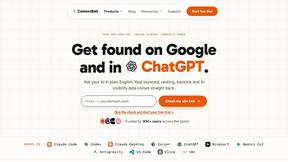
ContextBolt SEO
Research keywords, competitors, backlinks and AI visibility in Claude or Codex. Keep the findings in your SEO dashboard.

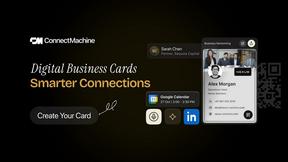
connect machine
privacy-first, AI-powered contact management platform

LinkedIn Translator
Turn rough notes into credible LinkedIn writing or decode professional jargon.