

Alternatives to xyOps
xyOps is a next-generation workflow automation system that unifies job scheduling, monitoring, alerting, and ticketing for your entire infrastructure.
Explore 12 alternatives to xyOps. Compare features, pricing, and find the best fit for your needs.

iHatePosting
Create once, tailor for each platform, and schedule posts across 14 social networks from one simple dashboard.


Wisegrid
Wisegrid helps project-driven teams manage projects, workflows, resources, and reporting in a familiar spreadsheet-style workspace.

Postqued
Schedule and publish social content across 10 platforms with one dashboard, API, and MCP built for teams and AI agents.

Groniz
Run your social media on autopilot with AI agents. Post & schedule to 32+ networks from Claude Code, Codex, or Console.

AIQualityHQ
AIQualityHQ checks prompt quality for structure, safety, and privacy in under 10ms, all within your browser.

EchoLeads AI
EchoLeads AI is an enterprise-grade platform using intelligent AI voice agents to automate cold calling, lead qualification, and appointment.
Distro
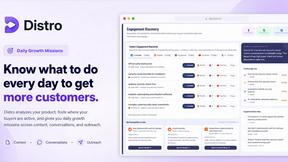
Distro finds live buyer conversations, drafts replies in your voice, and turns questions into SEO blog content you simply approve.

Minded
Minded empowers teams to effortlessly create AI agents that automate tasks and enhance customer service in minutes.

YCaaS
YCaaS provides comprehensive AI agents that seamlessly manage every role and task from start to finish, enhancing operational efficiency.

LazySEO
LazySEO fully automates your SEO workflow from keyword research to published content, helping founders grow traffic faster with zero manual effort.

About xyOps Alternatives
xyOps is a next-generation operations platform that unifies job scheduling, workflow automation, server monitoring, alerting, and incident response into a single, cohesive system. It falls squarely within the automation category, designed specifically for developers and operations teams seeking a unified stack that does not compromise on data privacy or extensibility. Users commonly explore alternatives to xyOps for a variety of reasons, including specific budget constraints, a need for a more lightweight tool for smaller teams, or a requirement for deeper integration with a legacy infrastructure that may not align with xyOps’ architecture. Others may be seeking a solution with a different licensing model or a more extensive out-of-the-box library of integrations. When evaluating an alternative to xyOps, it is critical to first assess how the tool handles data sovereignty and telemetry, as xyOps is built to run entirely on your own infrastructure without pushing data externally. You should also examine the breadth of its automation capabilities, ensuring it covers both scheduling and real-time incident response without forcing you to purchase separate modules. Pricing transparency is another key factor; look for a platform that does not hide essential features behind paywalls or impose arbitrary limits on the number of jobs or nodes you can monitor. Finally, prioritize extensibility and openness, as a truly effective alternative should allow you to customize workflows and integrate with your existing toolchain without vendor lock-in.
FAQs about xyOps Alternatives
What is xyOps?
xyOps is a next-generation system designed for job scheduling, workflow automation, server monitoring, alerting, and incident response, all combined into a single, cohesive platform. It is built to give developers and operations teams complete control over their automation stack without requiring them to surrender data, freedom, or visibility. Unlike many competing tools, xyOps is open, extensible, and designed to run anywhere, including on your own infrastructure.
Who is xyOps for?
xyOps is built for developers and operations teams who want to control their entire automation and monitoring stack within a single platform. It is ideal for organizations that prioritize data privacy, as xyOps does not push telemetry back to any external party. It also suits teams that need an extensible solution that can run on any environment, from on-premises data centers to cloud infrastructure.
Is xyOps free?
Based on the product description, xyOps does not hide features behind paywalls, suggesting a transparent pricing model, but it is not explicitly stated as free. The platform emphasizes openness and extensibility, meaning users can access its full feature set without artificial restrictions. For specific pricing details, including any free tiers or self-hosted options, you would need to consult the official xyOps documentation or sales team.
What are the main features of xyOps?
xyOps provides a unified set of features including job scheduling, workflow automation, server monitoring, alerting, and incident response. It is designed to be a single cohesive platform, eliminating the need to integrate separate tools for each function. Key differentiators include its open architecture, lack of telemetry pushback, and ability to run anywhere without vendor lock-in, ensuring full visibility and control for the user.